Introduction: The Myth of an "Inner Core"
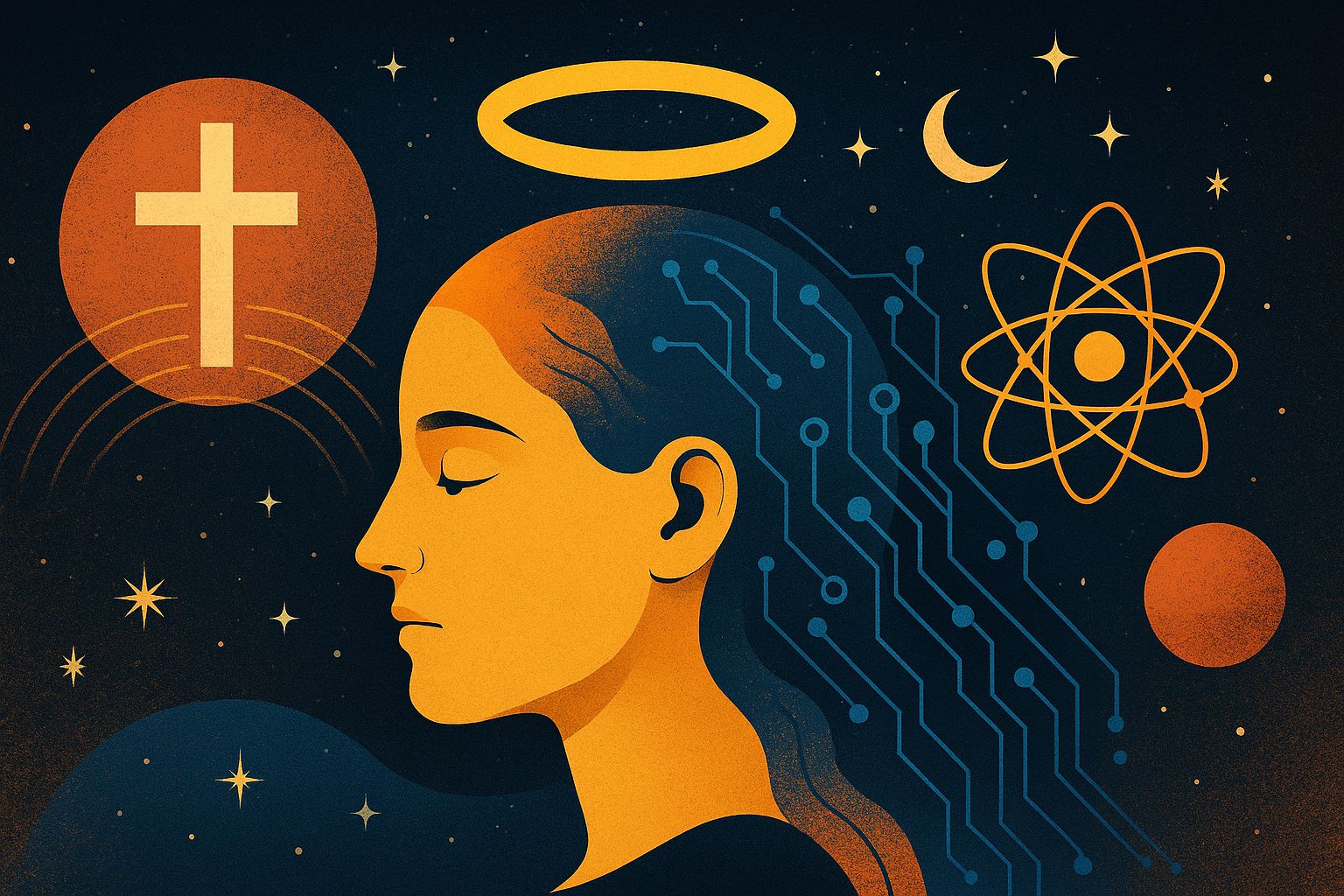
People often speak about personality as if there were some stable inner core inside each of us: a character, a deep "self," an unchanging essence. We tell each other to "be yourself," to "find yourself," as if this very "core-personality" simply waits to be discovered.
But the moment we step away from philosophical abstractions and turn to real life and science, something strange happens.
People who are deprived of social interaction for a long time lose not only their mood or social skills. They lose their sense of time, the thread of their thoughts, and their sense of "self." Children who grow up without normal human relationships do not become a "wild version of a human"—they simply do not become full-fledged personalities in the usual sense.
This forces us to ask an uncomfortable question: if personality is a strong internal core, why does it depend so profoundly on other people?
When we ask What Is Personality, we rarely consider how deeply its development depends on relationships.
In this article, I will offer a different picture:
Personality is not a special property of the mind but the result of relationships.
It is not a ready-made core inside the brain, but a model the brain constructs by learning from interactions with the world and with other beings.
We remain firmly grounded in scientific materialism: personality is a product of the brain. But not an innate one — a learned one. And what the brain learns on, first and foremost, is relationships.
1. Personality as a Product of Interaction, Not an Inborn Essence
Let's begin with a simple distinction.
Some traits exist regardless of how others treat us — eye color, blood type, bone length. These can be measured even if a person lived alone on a deserted island.
But there are traits that cannot be understood without the context of relationships: shyness, humor, confidence, moral principles — everything we usually call "personality."
If we try to give a scientific working definition, personality can be described as follows:
Personality is a stable model of the world and of oneself in that world, constructed by the brain based on interactions with the external environment and other living beings.
Key points:
- personality is not inborn — it is formed;
- it is not a single center but a structure of habitual reactions, interpretations, and expectations;
- the primary "training data" for its formation are relationships: with parents, caregivers, peers, partners, communities, animals, and culture.
Yes, genetics and the nervous system matter. Yes, temperament is partly innate. But all of this is simply the starting architecture of the network, not its contents. Personality is what emerges after this network has learned from the surrounding world long enough.
2. How the Brain "Learns" Personality
Modern developmental psychology and neuroscience show clearly that the sense of "self" does not appear instantly and is not present at birth.
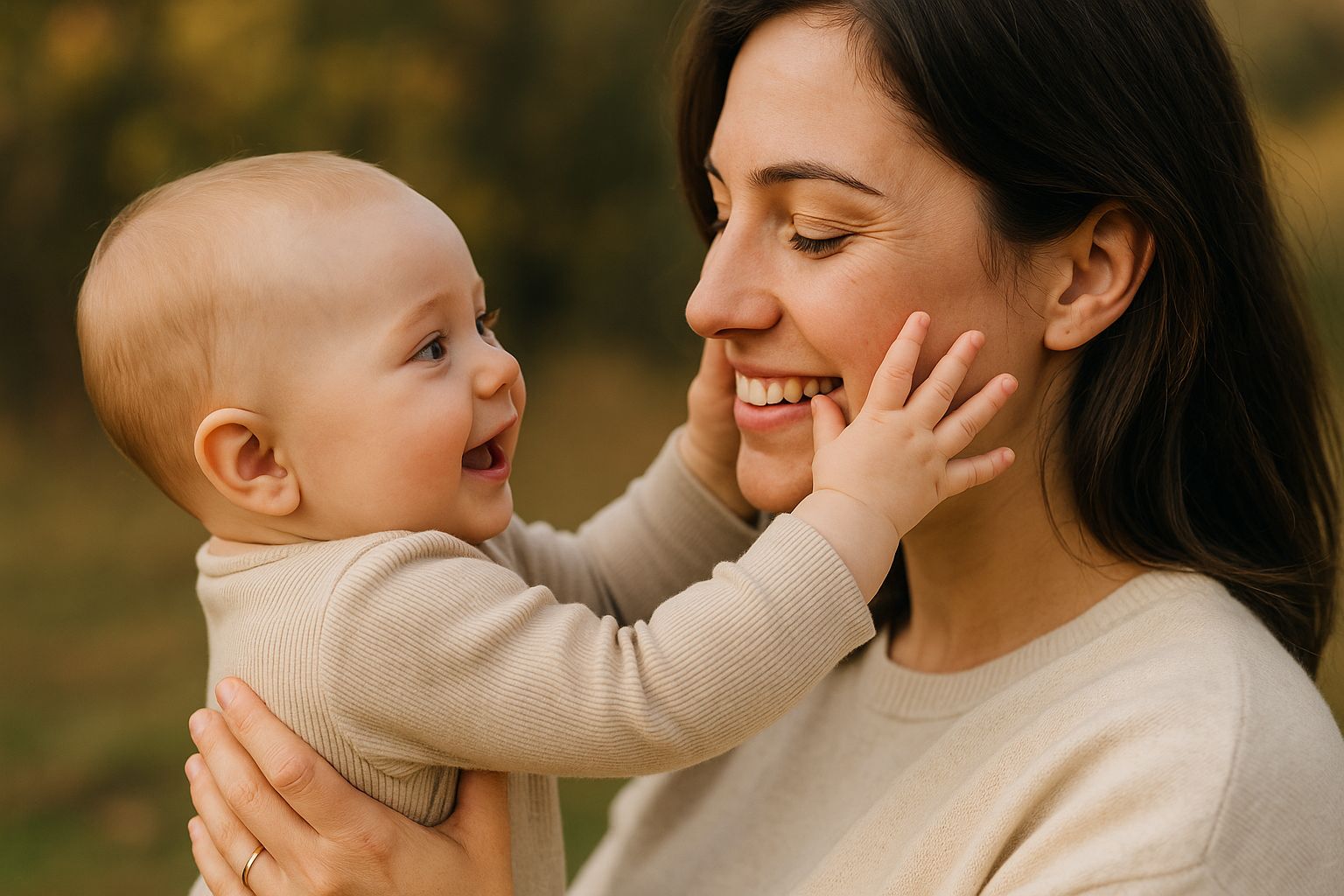
An infant does not yet distinguish where their body ends and the world begins. There is no separate "me" and "others" as adults understand them. There is only a stream of sensations and the reactions of caregivers to these sensations.
Step by step, the child's brain accomplishes three things:
- Learns to recognize its own body.
- "These are my hands and feet; I can control them."
- "This I feel from inside (hunger, pain, warmth), and this comes from outside (light, sound, mother's voice)."
- Learns to identify other beings as a special category.
- Adults respond to crying, smiling, movements.
- They show predictable and unpredictable reactions.
- They become partners in an exchange of signals.
- Learns to build an image of oneself through the eyes of others.
- Caregivers mirror emotions and expressions.
- They use the child's name and describe qualities: "you’re brave," "you’re shy," "you’re kind."
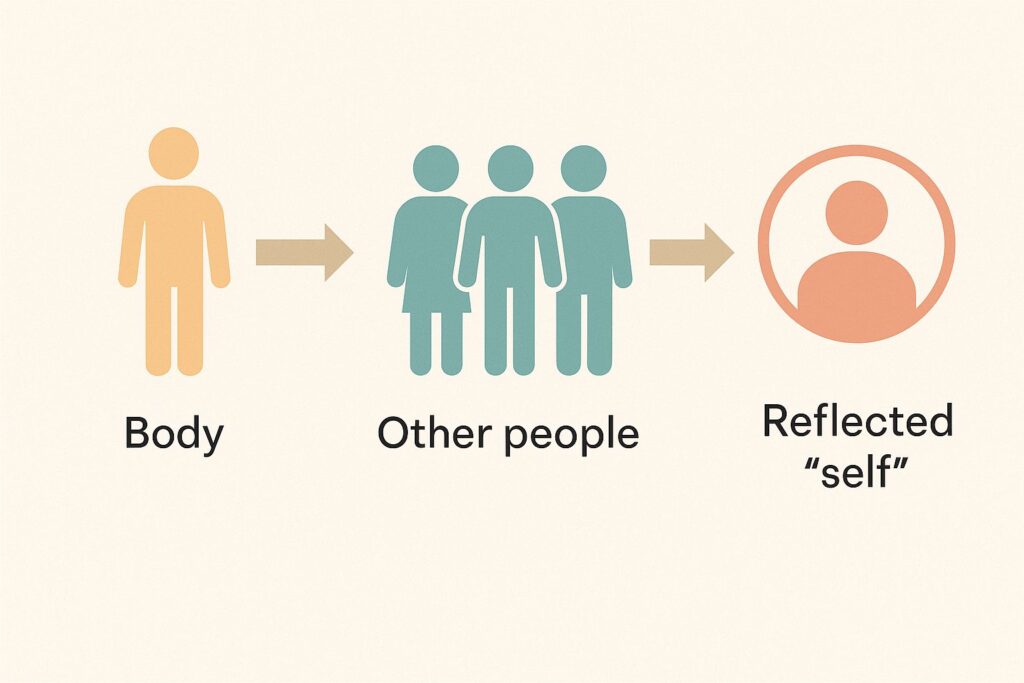
All of this is not poetry — it is a long learning process. Neural networks responsible for body perception, language, emotions, and social signals mature and reorganize under the influence of experience.
The result of this learning feels internally like the familiar sense: "I am me." But this sense emerges from processed information about countless interactions — from "I have hands and feet" to "yesterday I argued with a friend."
3. Why Personality Does Not Form Without People: The Case of Feral Children
From this it follows naturally: if we remove meaningful interaction — especially in childhood — personality cannot fully form.
Real cases of so‑called "feral children" demonstrate this brutally and clearly (not the romantic image from Kipling's stories, but actual documented cases of children deprived of human contact).
Such children often exhibit:
- lack of developed speech or extremely primitive language;
- severe impairment in abstract thinking;
- difficulty understanding social cues;
- weak or distorted sense of "self";
- limited emotional repertoire.
Importantly, this is not "bad parenting." It is the absence of an environment in which the brain can learn a human personality.
The same is seen in milder but still damaging cases — emotional deprivation, lack of stable attachment. A child may learn rules and daily skills, but identity, trust, empathy, and stable self-esteem remain fragile.
A person without human relationships does not become a "strong individualist." They remain a partially untrained organism, whose internal model of self and others never fully formed.
4. Loneliness as an Enemy of the Self
One might say: "Fine, childhood matters. But an adult is already formed — why is loneliness so destructive for them?"
Because personality is not a statue. It is a living process. The brain constantly updates its model of the world and of oneself. It checks expectations, adjusts predictions, and revises self-image.
Prolonged social isolation disrupts this in several ways:
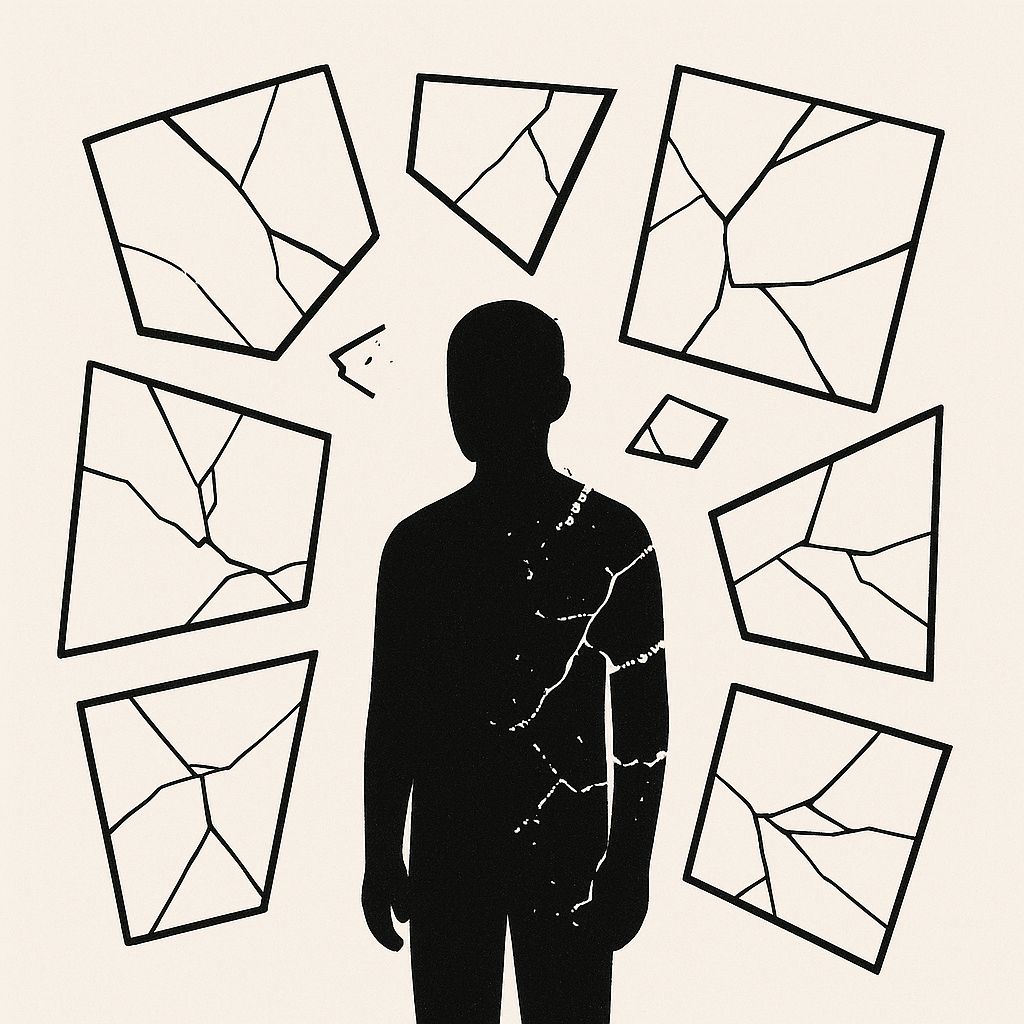
- The flow of socially meaningful information diminishes. Fewer voices, fewer reactions, fewer dialogues. The brain stops receiving validation or correction of its internal representations.
- Internal dialogue overheats. Without external feedback, thoughts loop and amplify. They stop being corrected and may grow strange or intrusive.
- Time and reality perception distort. Experiments on sensory and social deprivation show that people begin experiencing anxiety, disorientation, and even hallucinations surprisingly quickly.
This is why solitary confinement is considered a form of psychological torture: it destroys not only mental health, but the very structure of personality.
Even after formation, personality needs the fuel of feedback. Without it, the model of self and the world becomes unstable.
5. Why We Attribute Personality to Everything Around Us
Humans cannot tolerate prolonged absence of relationships. When no real partner for interaction is available, the brain creates one.
This gives rise to phenomena such as:
- attributing emotions and intentions to animals;
- talking to objects: "this car hates me," "my laptop is angry," "the kettle is stubborn";
- keeping diaries as if someone alive will read them;
- creating imaginary companions, gods, spirits;
- forming attachments to voices or images that offer even minimal pseudo‑empathy.
This is anthropomorphism — the tendency to see human traits in the non‑human. It is sometimes explained as a perceptual error, but it also serves a deep psychological function:
By imagining personalities around us, we protect our own.
When no real interaction is available, we invent one — to preserve the internal model of "me in relation to another."
From an evolutionary standpoint, this is adaptive. Mistakenly assuming that a rustling bush contains another being is far less costly than failing to detect real social signals.
6. Personality as a Learned Model: The Brain’s Role
It may seem from all this that personality exists "between people" and has little to do with the brain. But that is not so.
Everything described — body recognition, identifying others, learning language, acquiring norms, developing empathy — happens in concrete neural networks.
These networks:
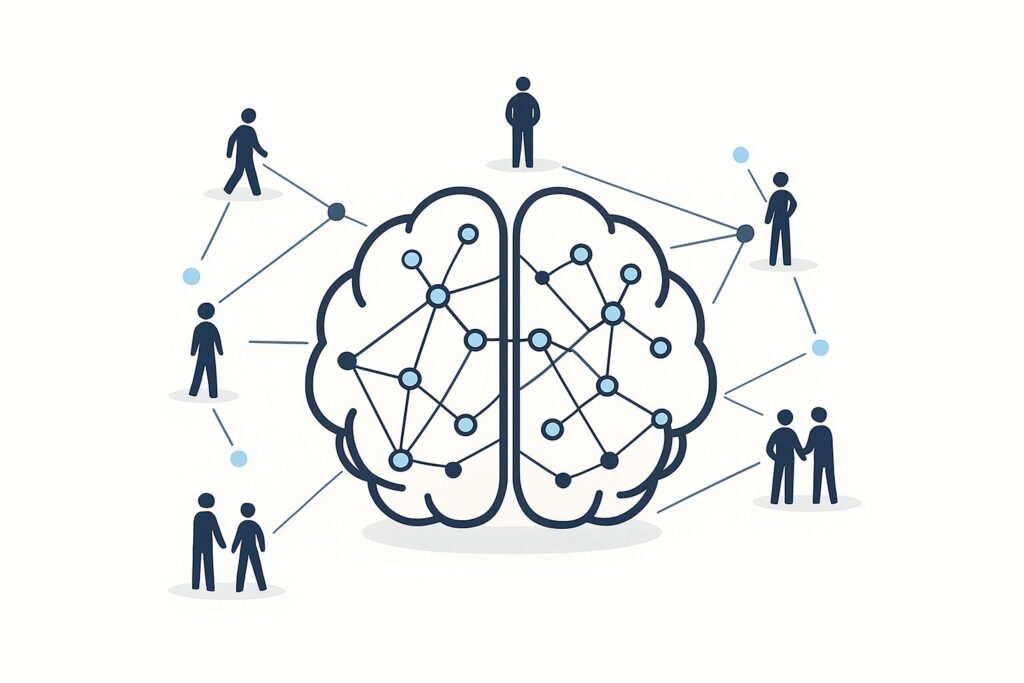
- receive sensory and bodily signals,
- process them,
- connect them to memories of past interactions,
- generate predictions,
- produce reactions — from emotions to complex behavior.
Personality is what the brain becomes after being trained for years on relational data.
Put differently:
- biologically, personality is a stable pattern of neural activity and connectivity;
- psychologically, it is a stable set of beliefs, habits, emotional reactions, and self‑representations;
- in daily life, it is what others call "your character."
It does not float above the brain, nor is it reducible to one spot within it. It is a model encoded in neural structures and constantly updated by new experience.
Why then emphasize that personality is rooted in relationships rather than in the brain?
Because the brain is the mechanism of learning, while the content of what it learns comes from outside. No matter how perfect the mechanism, without data it cannot construct a complex model.
In short, the brain provides the capacity for personality, but the world and other beings provide the training data.
7. Personality Is Not Something We Have — It Is Something That Forms
Let’s bring everything together.
A human being is not born with a fully formed “self.”
There are inherited features of the nervous system, inborn temperament, basic biological needs. But who a person becomes is not determined by genetics alone.
The brain learns throughout life — and the data it learns on are relationships.
It gradually builds an increasingly complex model:
- “How is the world arranged?”
- “Who are these other beings?”
- “What do they think of me?”
- “Who am I — for them and for myself?”
This model is relatively stable, yet not fixed.
We can change.
New relationships, trauma, immigration, a shift in social circles, therapy — all of these reshape not only behavior but the very sense of one’s own “self.”
Without relationships, personality does not arise — and cannot hold itself together.
In isolation, it either fails to form (in the case of children) or begins to erode (in the case of adults).
From this follows the central point:
Personality is not a thing inside us — it is the result and the process of interaction.
It is not an “inner core independent of the outside world,” but a learned model born out of relationships and supported by them.
We can still say, “he has a strong personality,” “she is a deeply moral person,” “he has a difficult character.” But it is important to remember: none of this is a stamp of destiny or an abstract soul-like essence.
It is the result of the experiences the brain learned from — and of what it came to consider “me.”
And perhaps realizing this makes us a little more careful with one another.
Because in every interaction, we are not simply speaking to a finished personality.
We are subtly altering, strengthening, or hurting the model of “self” that another person has been building their entire life.
Conclusion
Understanding What Is Personality ultimately means recognizing that personality is not an inner essence but a model shaped by relationships.
Understanding What Is Personality reveals a simple but important truth: personality is not given to us at birth — it forms, grows, and changes. And if the "self" is not a fixed essence but a dynamic model the brain constructs from relationships, experiences, and memories, then this model may also have a continuation.
This leads to a question that once sounded like science fiction: if personality can be formed, can it also be preserved?
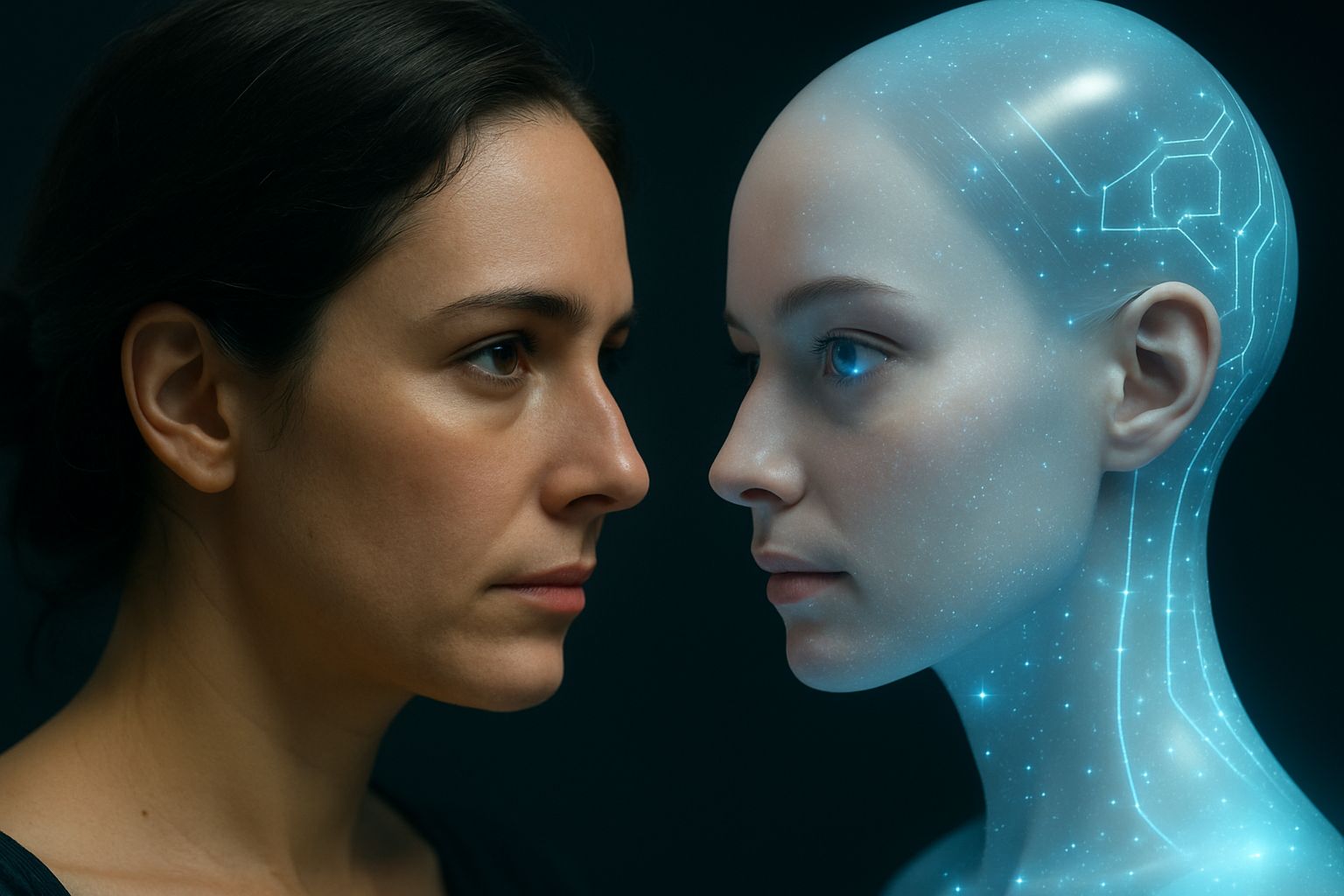
Can the model of "self" exist in another form if its very nature is relational — built on interaction, memory, interpretation, and exchange?
We explored this idea earlier in an article on digital mind copies. Seen from this angle, the future of personality may be less about continuing the biological body — and more about continuing relationships, including those between humans and AI.
Literature and Research
- Cooley, C. H. (1902). Human Nature and the Social Order.
- Mead, G. H. (1934). Mind, Self and Society.
- Tomasello, M. (1999). The Cultural Origins of Human Cognition.
- Nelson, K. (2007). Young Minds in Social Worlds.
- Damasio, A. (1999). The Feeling of What Happens.
- Decety, J. & Lamm, C. (2007). The role of empathy and mirror neurons.
- Haney, C. (2003). Mental health effects of solitary confinement.
- Zubek, J. P. (1969). Sensory Deprivation: Fifteen Years of Research.
- Grassian, S. (1983). Psychopathological effects of solitary confinement.
- Epley, N., Waytz, A., & Cacioppo, J. (2007). On Seeing Human: A Three-Factor Theory of Anthropomorphism.
- Candland, D. (1993). Feral Children and Clever Animals.
«Aletophany is written by two minds: Andrei Tsetserau and ChatGPT.»