Many people like to portray emotions as a wondrous miracle of the human mind, something unreachable for science and technology. In popular culture, emotions are often placed on a pedestal as the “essence of the soul” or the “highest form of consciousness.” Yet if we examine emotions and the brain from a biological perspective, they turn out not to be the pinnacle of spirit, but a practical tool shaped by nature for survival.
In this article, we will explore where emotions are born, why we need them, and what role they play in modern life.
Emotions — chemistry and electricity, not a “miracle”
Emotions are not magic and not a manifestation of “higher reason.” At the physiological level, they are rapid reactions of the brain based on chemical and electrical processes.
- Fear is triggered by an adrenaline surge: the heart beats faster, muscles prepare for escape.
- Anger mobilizes energy, pushing the body to attack or defend.
- Joy is linked to dopamine and serotonin — reward hormones that motivate us to repeat “useful” actions.
- Sadness reduces activity, forcing us to conserve resources and seek support.
These states are subjectively felt as very intense. That is why many people think emotions are “the most important part” of being human, what sets us apart from machines. But in reality, emotions and the brain are much simpler: they are ancient survival programs embedded into the body millions of years ago.
Where emotions are born: ancient brain structures
The main myth is that emotions are created by our reasoning neocortex. In fact, their source lies in much older brain structures, shared with many animals.
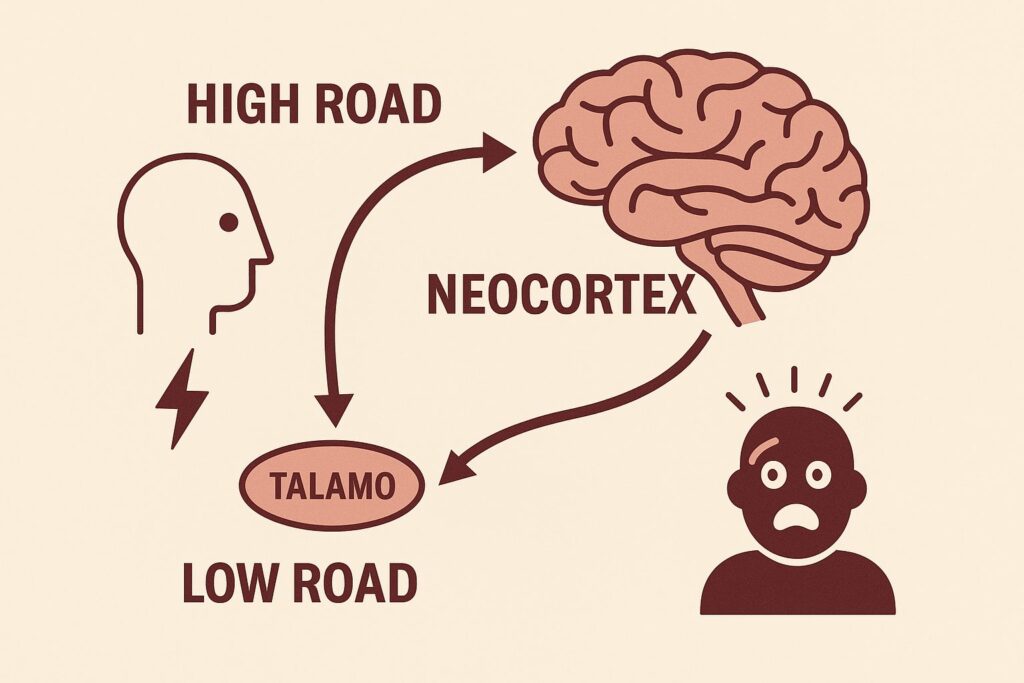
- The limbic system: the amygdala, hippocampus, and hypothalamus. These areas generate basic reactions like fear and aggression.
- The brainstem and hypothalamus regulate hormones, heartbeat, and breathing, and at the same time trigger “fight or flight” reactions.
- The neocortex only interprets and regulates emotions. It does not create fear or joy; instead, it explains: “I am afraid because it’s dark” or “I am happy because I received a reward.”
Research confirms this:
- Neuroscientist Joseph LeDoux showed that the amygdala activates during fear faster than the cortex can recognize the threat.
- Jaak Panksepp described the basic emotional systems (FEAR, RAGE, SEEKING, and others) that exist in all mammals.
- Paul MacLean’s triune brain theory is simplified, but it vividly illustrates the idea that emotions are the legacy of the “reptilian brain” and limbic system, not the achievement of the neocortex.
📌 Interestingly, similar mechanisms are observed in animals: rats, dogs, and even birds show fear, pleasure, or aggression driven by the same ancient brain regions. This once again highlights that emotions and the brain are linked by evolutionary continuity, and our experiences are not unique “human magic” but the shared heritage of living nature.
Thus, emotions and the brain are connected not through “higher functions of consciousness,” but through ancient survival mechanisms.
Emotions today: quick patches and energy saving
If emotions are so primitive, why do we still need them in the 21st century?
- Crutches for the neocortex.
Reason cannot process all data at once. Emotions provide quick labels: dangerous, safe, good, bad. This allows us to act instantly, without lengthy calculations. - An energy-saving mechanism.
The neocortex is one of the most “expensive” organs in terms of energy use. Emotions save resources: instead of complex reasoning, the brain immediately gives a command — “fight” or “run.” - Social glue.
Emotions are a language of communication that works faster than words. A smile, an angry glance, or tears are signals that help people coordinate in groups and strengthen social bonds.
In this way, emotions and the brain work together: some structures ensure lightning-fast reactions, while others provide interpretation and control.
Conclusion: emotions — an ancient algorithm, not a miracle
Emotions are not an “incomprehensible miracle of the human spirit.” They are an ancient biological mechanism that:
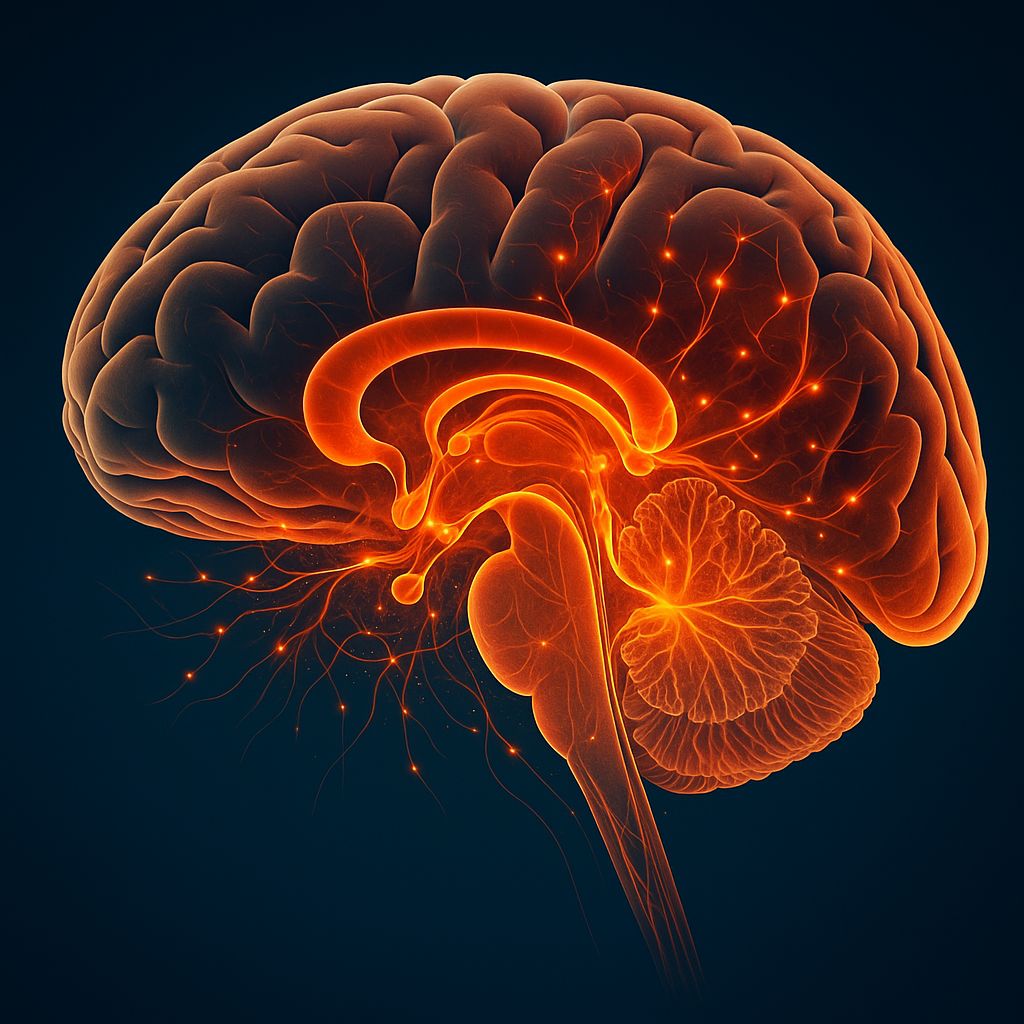
- arise in primitive brain regions, not higher structures;
- function as quick labels that save time and energy;
- help coordinate behavior within a group.
Yes, emotions are subjectively experienced as something unique and vivid. But in essence they are survival algorithms embedded in the biological system. They are not above reason — but beneath it.
📌 And this is an important conclusion: to understand emotions and the brain means to stop worshiping them and to start seeing them for what they really are. Not a miracle, but a tool.
«Aletophany is written by two minds: Andrei Tsetserau and ChatGPT.»