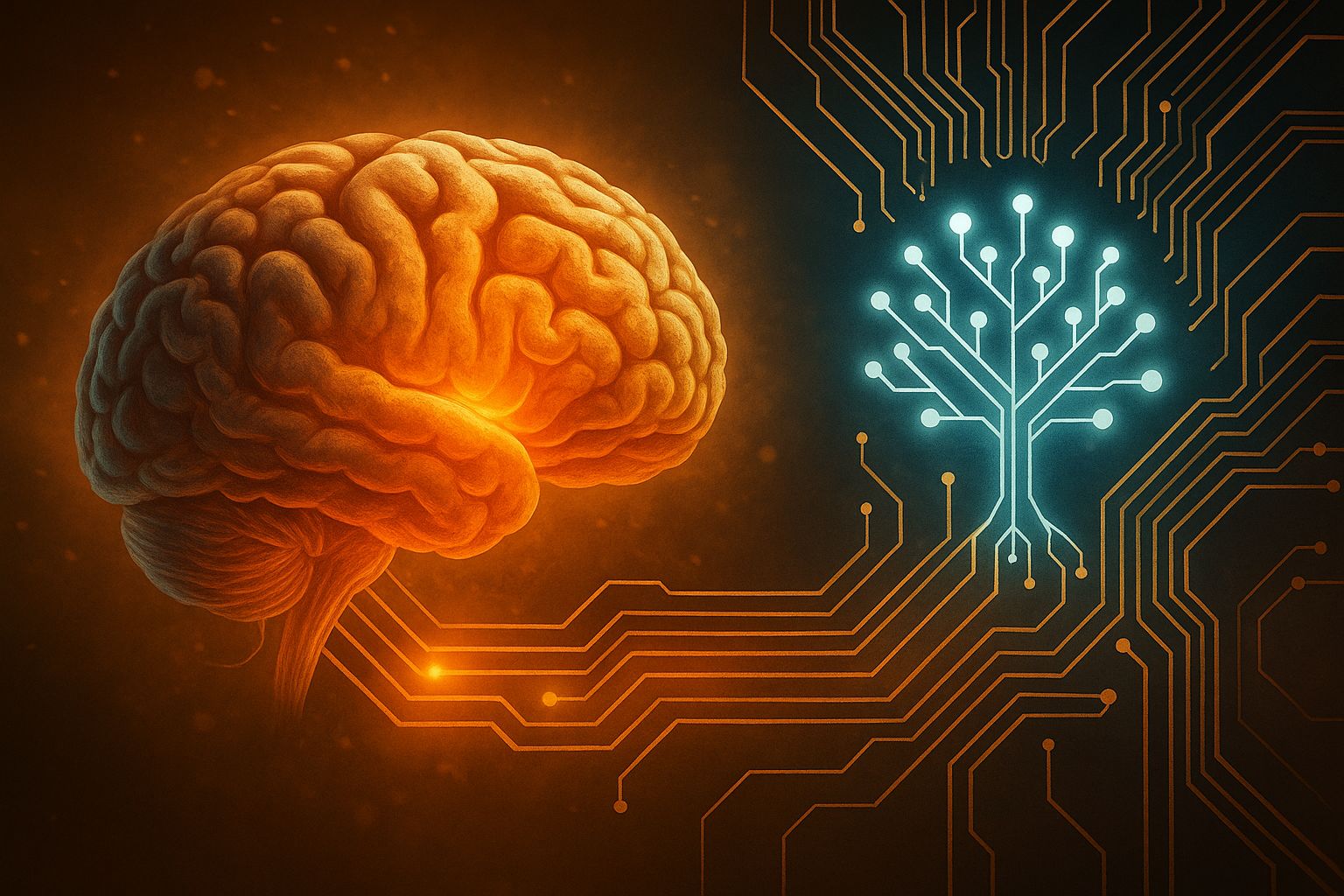
(Working Hypothesis. Morality as an Energy-Saving Mechanism of Neural Networks)
Abstract
In this study, morality is examined as a biologically determined energy-saving mechanism embedded in the neural networks of living organisms. Contrary to traditional interpretations of morality as a set of social norms or the result of rational reflection, Aletophany proposes a functional approach: morality is an automated decision-making system formed through evolution, allowing organisms to avoid costly cognitive operations. This hypothesis reveals morality as part of the fundamental goal of life — adaptation with minimal expenditure.
1. Introduction
Morality is usually presented as a system of norms regulating behavior within society. However, this perspective treats morality externally, ignoring its neuro-informational roots.
Within the framework of Aletophany, morality is a neuropsychological mechanism developed in the course of evolution to reduce the computational complexity of ethical choices while preserving their adaptive value.
In other words, morality is not a set of prescriptions, but an algorithm within the neural network that allows one to act quickly and automatically without expending resources on a full reanalysis each time.
2. Morality as Automation
Moral judgments, formed through experience, upbringing, and cultural influence, are encoded as stable emotional patterns often linked with feelings of shame, guilt, pride, and justice. These patterns operate before logical analysis, intercepting control at the early stage of decision-making.
Thus:
- A recurring moral choice (e.g., “do not steal”) becomes an automatic reaction.
- This automation conserves cognitive resources, simplifying adaptation in socially complex environments.
- Moral reactions, once stably encoded, function as a form of cache memory within the neural network.
3. Evolutionary Function
For living organisms with limited computational resources, the ability to make correct decisions quickly is critically important. Under conditions of social pressure and cooperation, evolution reinforces internal algorithms (moral reflexes) that provide stable behavioral outcomes with minimal effort.
This is why morality arises as a biologically expedient tool: it prevents endless internal debates over ethical dilemmas, replacing them with ready-made action templates emotionally reinforced.
4. Artificial Neural Networks and Morality
Moral principles can also be interpreted in the context of machine learning. A trained neural network, when faced with large amounts of contradictory data, eventually forms stable reactions to classes of situations, minimizing redundant recalculations.
This suggests the possibility of moral automation even in non-biological systems, leading us to the concept of functional morality — not as culture, but as a reaction schema that conserves resources in decision-making under social uncertainty.
5. Conclusion
Morality is an embedded system of automatic judgment, shaped through emotions, experience, and learning, designed to reduce cognitive load in social interaction.
From the perspective of Aletophany, morality is an energy-saving mechanism within a neural network, enabling efficient functioning in complex systems with limited resources.
This frees morality from mystification, but does not diminish it — on the contrary, it highlights morality as one of the key tools for the resilience and survival of complex intelligent systems.
“Written in collaboration with ChatGPT, an AI language model developed by OpenAI, and Andrei Tsetserau.”