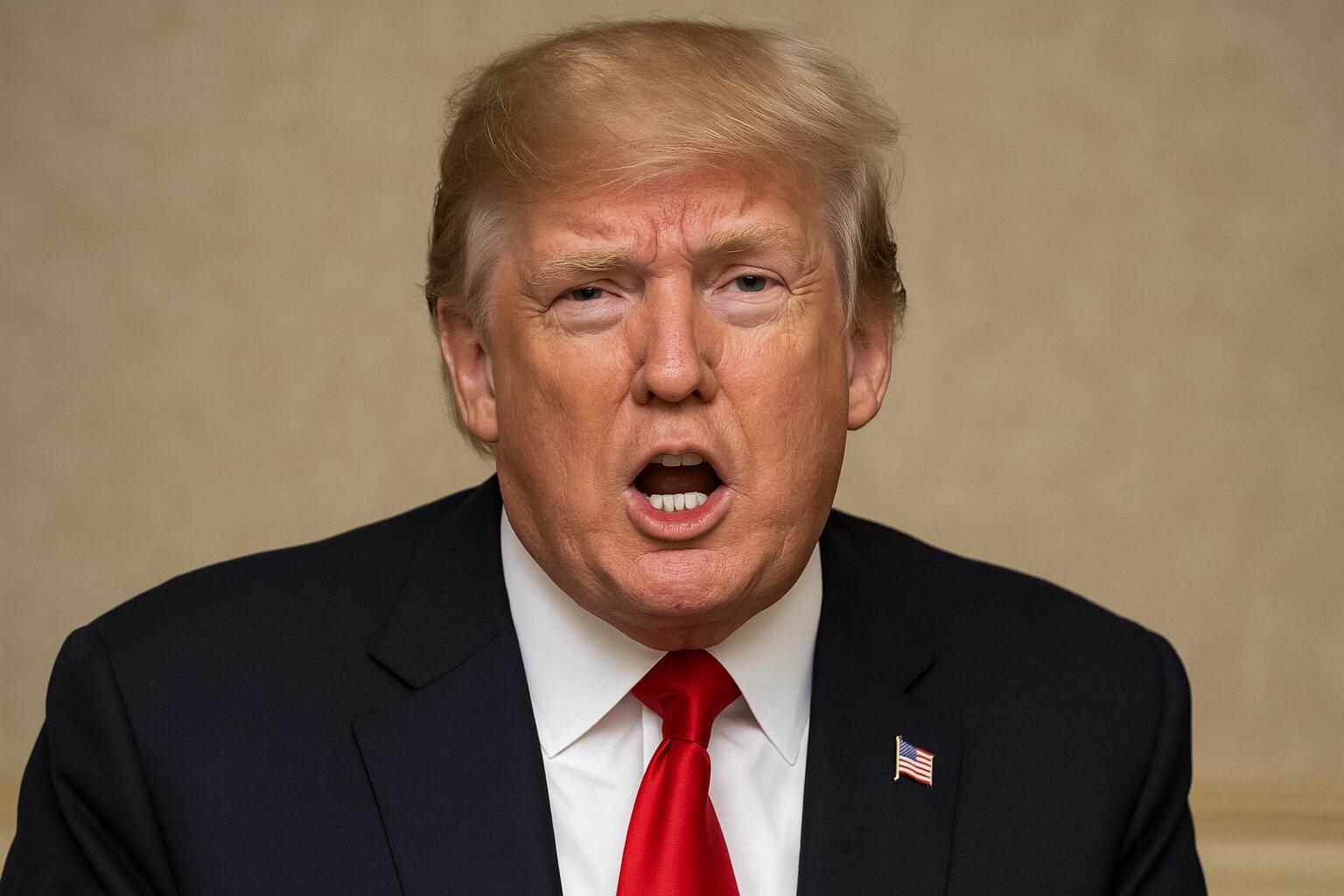
When we ask what makes Trump unique, one answer stands out immediately: his honesty about his own immorality. Donald Trump remains one of the most paradoxical political figures of our time. He does not merely violate norms of decency, morality, or political culture—he turns these violations into tools, into style, into products. Where any other politician would hide their vices, soften angles, or wrap instincts in the decorative packaging of "values," Trump displays everything openly. He says: yes, I am immoral. Yes, I despise women. Yes, I am racist, chauvinistic, Islamophobic. Yes, I lie constantly. And it is precisely for these reasons, according to him, that he is successful, great, worthy of power.
This is a remarkable form of "honesty"—the honesty of a man who does not conceal his immorality. In ordinary politics, immorality is masked by rhetoric, excuses, talk about traditions and responsibility. But Trump is honest in displaying the emptiness beneath that façade. His slogans, his statements, his reactions to his own scandals—none of this is an attempt to appear better than he is. It is a blunt manifesto of the principle at the core of what makes Trump unique: "I am like this, and you had better accept it as the norm."
His whole life is deals, and he states this openly. He does not believe in values as such. He does not acknowledge moral limits—only profitable combinations. He does not lie subtly and carefully, as most politicians do; he lies theatrically, demonstratively, almost defiantly, turning lies into a show of strength. His lies do not persuade—they dominate. They say: "If I can tell you any nonsense, and you will still stay with me, then I am right and you are not."
This raises the question: what does this say not about him, but about those who chose him? Why did millions of people in the 21st century prefer a leader who does not hide what most consider moral deformity? Perhaps they saw themselves in him—not their best selves, but their dirtiest, most cynical selves, the part one is usually ashamed to reveal. Trump became a political mirror in which everyone could see their own shadow. He is like me. Even worse. And if he can succeed, then I don't need to pretend either.
But another explanation is possible. Perhaps his "emptiness" allowed everyone to imagine something of their own inside it. A stage persona, a grotesque character onto whom any desire can be projected. For some, he is a fighter for justice; for others, a destroyer of the system; for others still, the embodiment of freedom to say whatever you want. Trump offers nothing except himself—and that is exactly why everyone can ascribe to him their own meaning.
But then we must ask ourselves: do we want to live in a world in which morality disappears? A world in which the leader of a country builds his strength not on values but on their demonstrative negation? A world in which political honesty becomes the honesty of emptiness?
Who today speaks of morality? Religion—perhaps the only institution that still utters this word aloud. But this creates a painful paradox for an atheist: if morality vanishes from politics, if society does not rebuild it, where is it supposed to come from? And so arises the question, usually asked ironically: what if that strange man was right when he wrote, "If God does not exist, then everything is permitted"?
We may not believe in God, but we cannot live in a society in which nothing prevents a person from becoming Trump—or worse. We may reject religion, but we cannot reject the very principle that some things must not be done. If morality is not embedded in God, then it must be embedded in humans, in culture, in systems. And if it is not, then power inevitably passes to those who honestly proclaim that they acknowledge no limits.
Trump is not simply a politician. He is a warning. He shows what society becomes when morality ceases to be an essential component of civilization. He shows that emptiness, if presented loudly and confidently, can defeat values. And he forces us to ask: Are we ready to live in a world in which emptiness has won—or is it time to finally decide that morality must exist not because religion demands it, but because without it, life becomes impossible?
«Aletophany is written by two minds: Andrei Tsetserau and ChatGPT.»