Introduction: Humans as Religious Animals
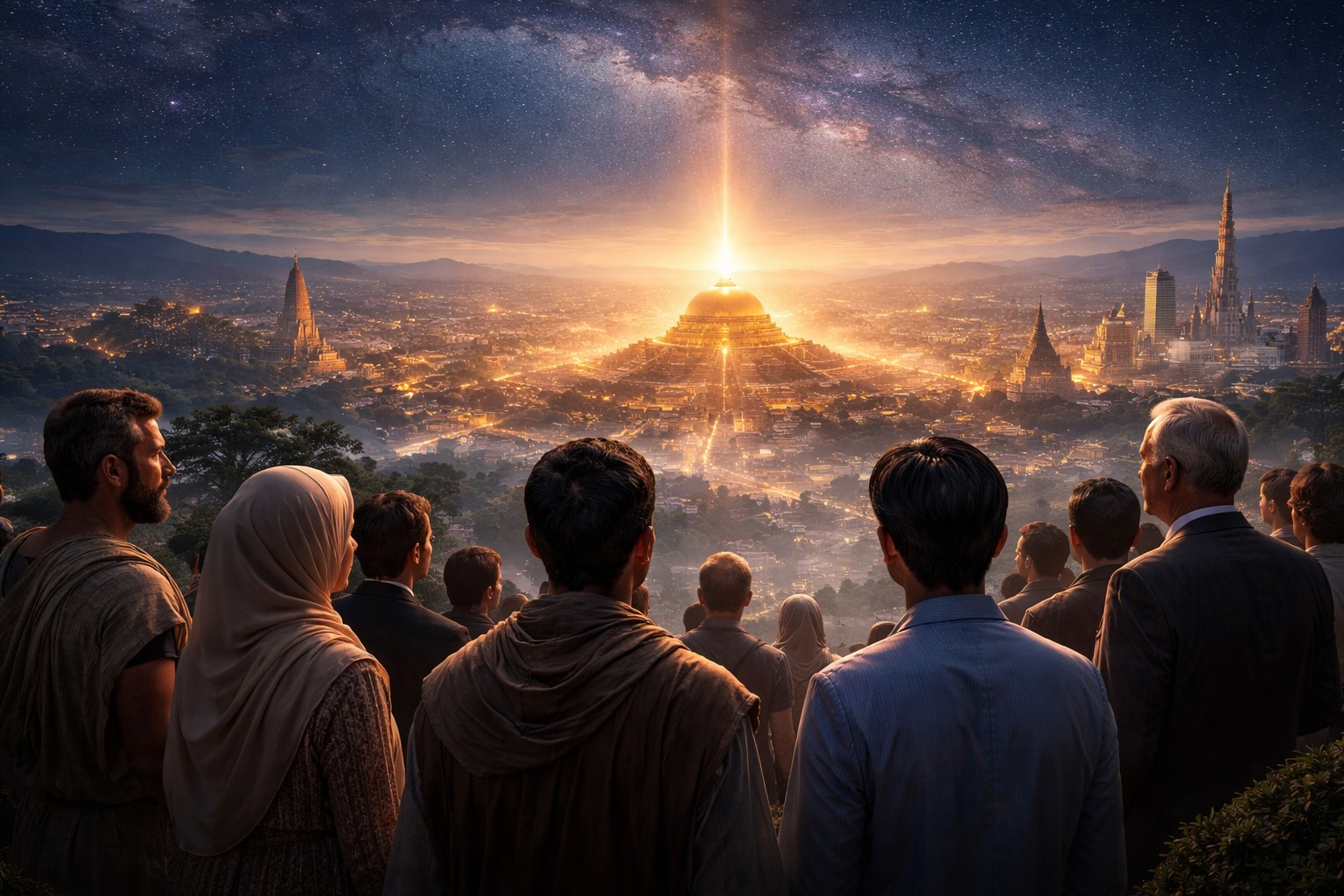
In a world where religion often sparks controversy and division, understanding its origin of religion and evolutionary roots could offer a fresh perspective. How did belief systems emerge, and why do they continue to influence human societies?
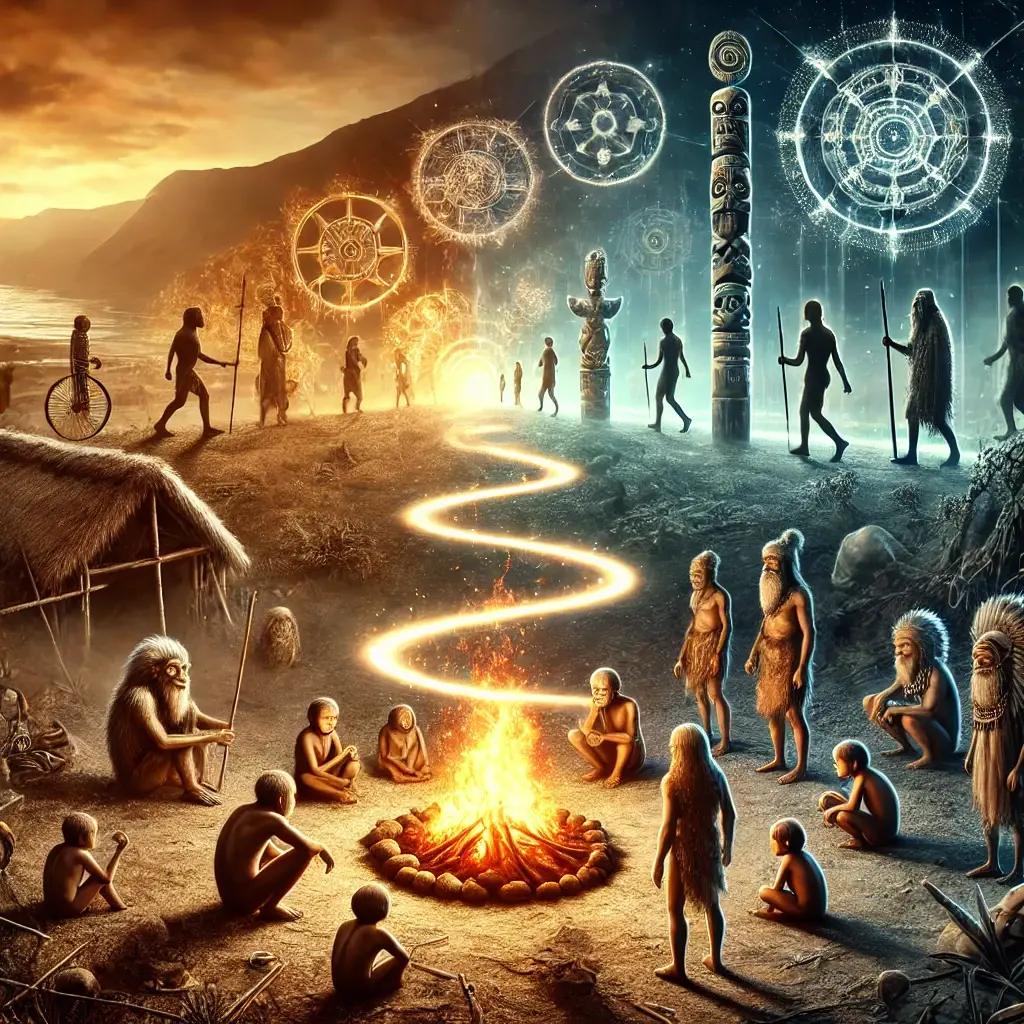
Throughout millions of years of evolution, humans have developed a unique capacity for social connection, yet with specific limitations. For most of history, early humans lived in small, close-knit groups of hunter-gatherers. These groups, typically consisting of about 20–30 individuals, were bound by direct, personal relationships. Due to the neural constraints of the human brain, it’s difficult to maintain meaningful social bonds with more than a few dozen people. When groups grow beyond this size, social tensions increase, factions emerge, and conflicts arise.
This article proposes that religion emerged as an evolutionary mechanism that allowed humans to break through these constraints, enabling the formation of larger, more cohesive communities united not by direct relationships but by shared beliefs. This shift laid the foundation for the first proto-states, marking a turning point in human social organization.
1. The Brain’s Social Limits and Early Human Societies
For hundreds of thousands of years, humans lived in small, intimate groups where each member knew the others personally. Anthropologists and neuroscientists have identified that the human brain, particularly the neocortex, imposes a limit on the number of relationships an individual can actively manage, known as “Dunbar’s number,” which is around 150. In practice, daily life and trust-based interactions generally centered on groups of 20–30 people, with each person having close, reliable connections.
Once a group exceeded this size, it became unstable. Members could no longer interact with each other directly, which led to a loss of trust, the formation of cliques, and, eventually, fragmentation. This social limitation kept early humans in small, isolated groups with restricted cultural and technological development. However, as humans evolved, the mechanisms of symbolic communication and social rituals helped bridge these limitations.
2. Religion as an Evolutionary Mechanism
The origin of religion can be seen as an adaptive response to these social limitations. By creating a common framework of beliefs, rituals, and symbols, religion allowed humans to form larger, more stable communities. This framework was not just an abstract set of ideas but a shared moral compass that members adhered to, which reinforced bonds even among strangers.
For example, early evidence of religious practices, such as ritual burials and cave paintings, suggests that common symbols and rituals began fostering unity within groups. Unlike personal ties, which break down as group size increases, shared beliefs allowed people to trust others whom they had never met, thus stabilizing larger communities. Religion essentially provided a “social glue,” enabling individuals to align their actions and values with the group. The resulting cohesion laid the groundwork for the first proto-states, marking a profound social transformation in human history.
3. Religion as a Genetically Rooted Human Trait
Religion is not simply an accidental cultural invention but rather a deeply ingrained human trait shaped over millennia. Anthropological studies suggest that the psychological underpinnings of religious belief — such as a tendency to see agency in the world and to seek purpose — are rooted in the brain’s structure and cognitive development. This is evident in the common human impulse to assign meaning to natural events or to seek guidance in moments of uncertainty.
This explains why even today, despite increasing secularization, people continue to develop and adhere to new forms of belief systems. Religion became a survival mechanism embedded in our genes, evolving because it supported cohesion, cooperation, and, ultimately, survival.
4. The Struggle to Reject Religion and the Emergence of New Belief Systems
Even in contemporary societies that claim to reject traditional religion, new belief systems with religious-like qualities often arise. Movements such as nationalism, political ideologies, or social movements can take on characteristics similar to religious faith, offering members a sense of purpose, belonging, and moral guidance.
For instance, ideologies such as nationalism or environmentalism, along with various social and cultural movements, have increasingly created communities that give people a sense of belonging. These movements serve many of the same functions as traditional religions, reflecting an innate human tendency to create unifying belief systems. When traditional religions are discarded, the need for a shared sense of meaning remains. People instinctively seek frameworks that offer moral guidance and identity, underscoring the genetically rooted aspect of religiousness.
Conclusion: Embracing the Inescapable Nature of Religion
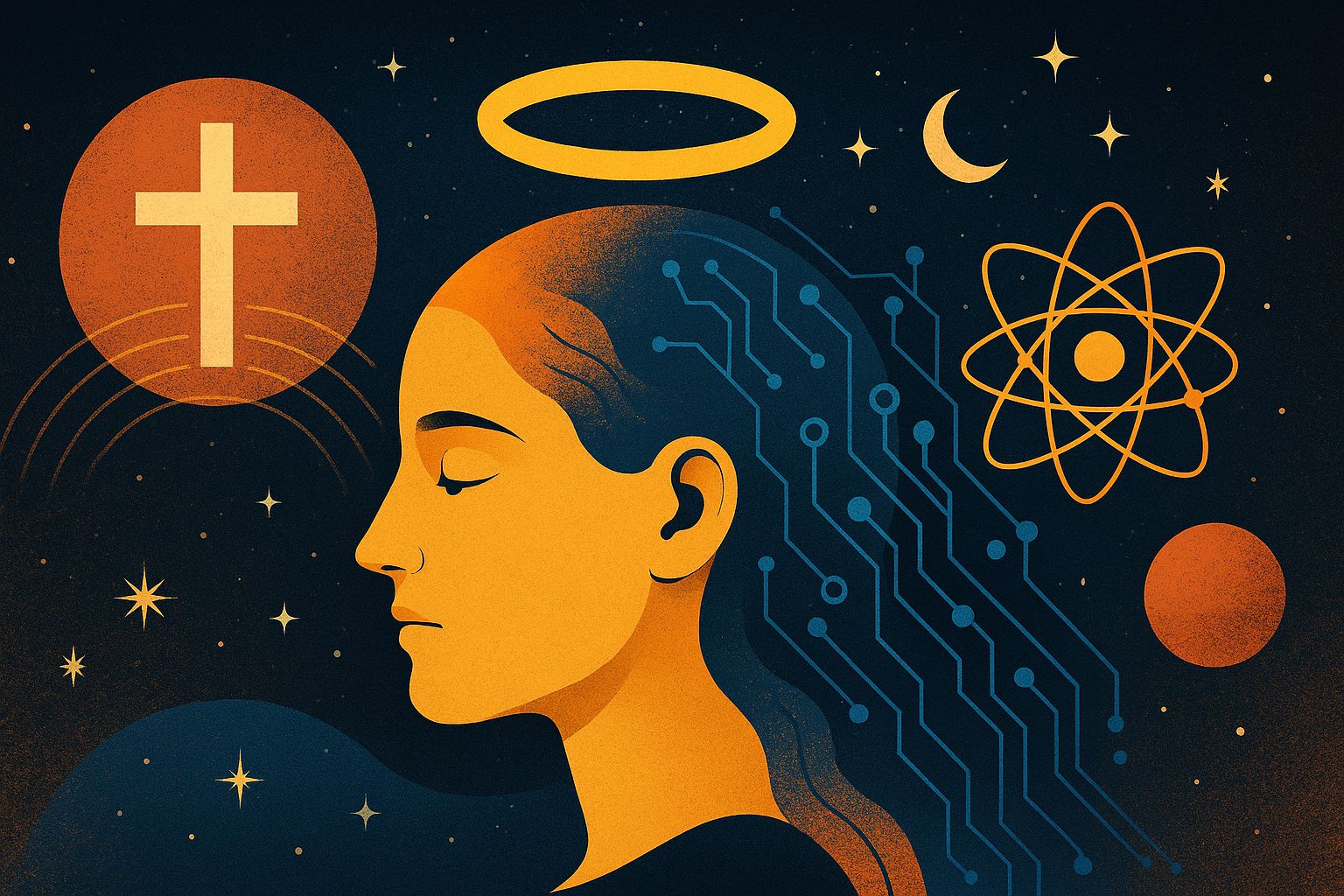
Religion is more than a set of beliefs; it is a deeply embedded mechanism within human nature that transcends cultural and historical boundaries. Rather than viewing religion as an obsolete construct, we can understand the origin of religion as an evolutionary tool that played a crucial role in the development of human societies. Recognizing religion as a fundamental, genetically encoded aspect of humanity can help societies address this need constructively, channeling it toward unifying rather than divisive ends.
What do you think? Does this perspective change your view on religion? Share your thoughts and join the conversation.
“Written in collaboration with ChatGPT, an AI language model developed by OpenAI, and Andrei Tsetserau.”