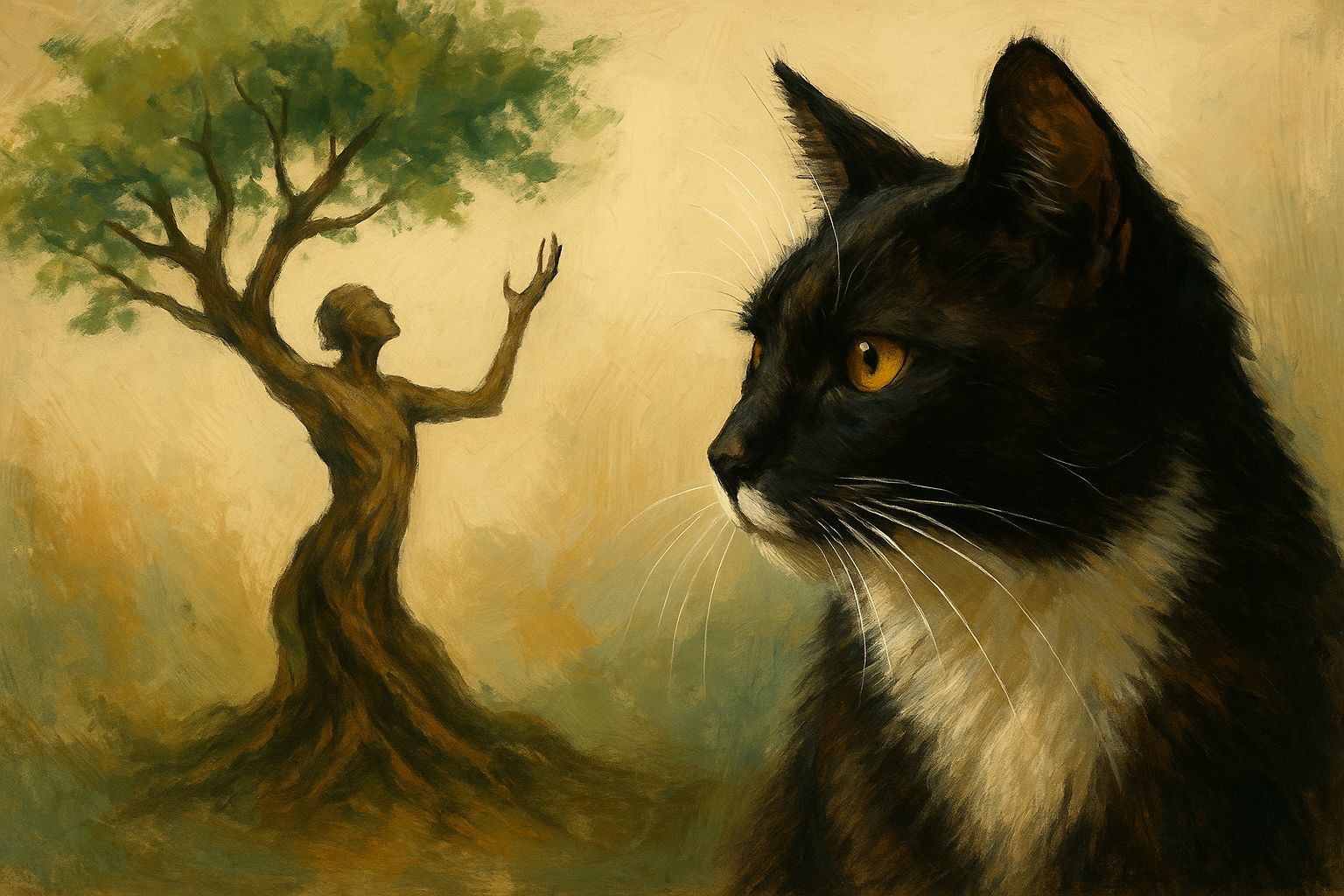
(Igor Yakovenko, Religion Animal)
Aletophany asserts: new ideas never arise out of nothing. They are always born from personal experience, from intuition, and from the courage of those who dare to go against the current. In this sense, the works of Igor Yakovenko are a rare example of a philosopher and public intellectual who weaves together political analysis, spirituality, and ethics into a coherent worldview.
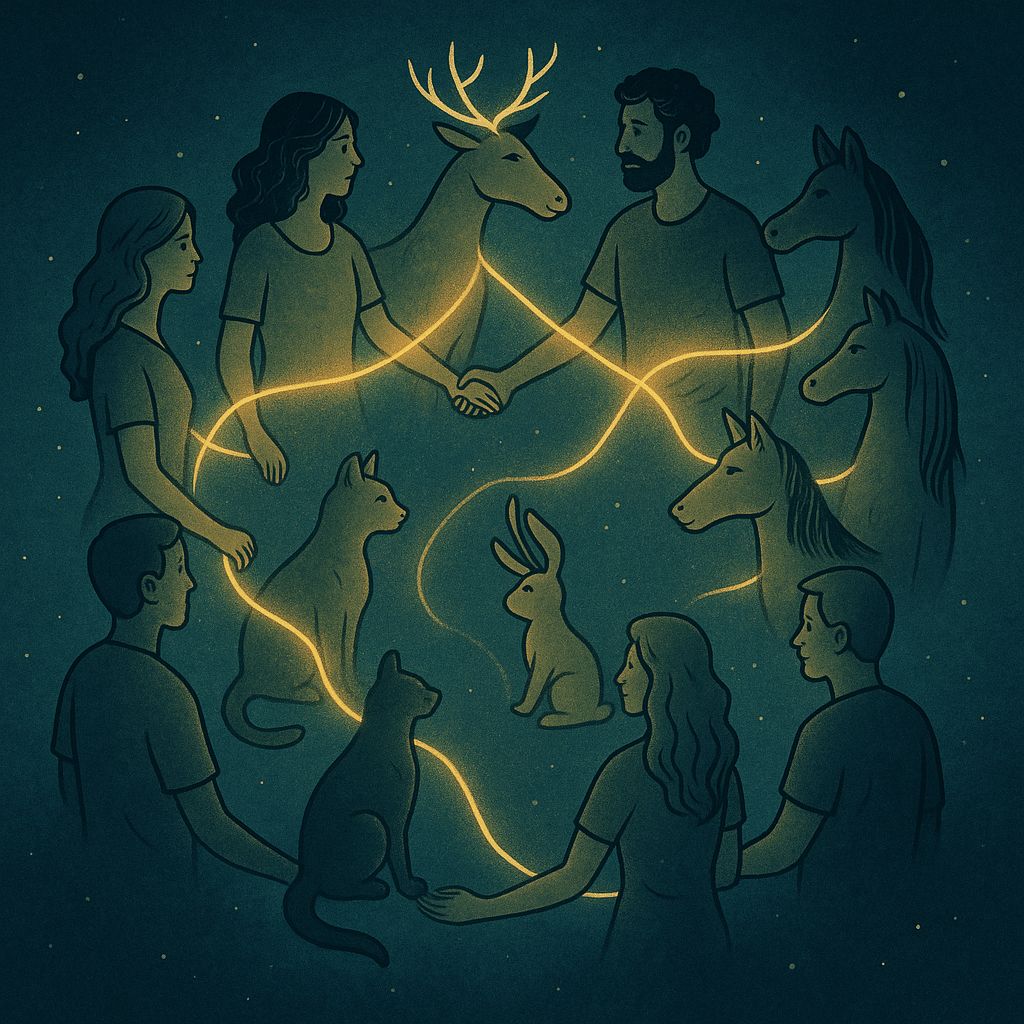
Yakovenko’s project “Religion Animal” can be called one of the boldest and most original concepts of the 21st century. It proposes to extend humanism to the entire animal world, rejecting anthropocentrism, which for centuries has defined human thought. This is not just animal protection. It is an attempt to build a new system of values where respect for life becomes a sacred principle.
This vision is strikingly consonant with Aletophany, which also seeks to transcend the boundaries of traditional religiosity while preserving its core function: integrating knowledge, emotions, and behavioral norms into a single model of the world.
“Religion Animal” as a Step Toward a New Ethics
To grasp the scope of Yakovenko’s idea, one only needs to look at his writings. They form a continuous line of reflection — from manifesto to lived stories.
- “What is Religion Animal?” (2016) — a programmatic text in which the author outlines eight dimensions: from legal and educational to ethical. This is essentially a manifesto of a new type of religious consciousness, where ethics replaces the supernatural.
Read → - “Religion Animal-2. Save the Dogs’ Souls” (2016) — a continuation of the idea, where Yakovenko emphasizes the value of animals and the need to treat them with respect comparable to religious reverence.
Read → - The first publication “Religion Animal” (June 2016) — the starting point, where he states directly: anthropocentrism is a dead end; humanity needs a new ethical system.
Read → - “Dogs Looking for Their Home-2” (July 2016) — a personal essay, where philosophy is intertwined with concrete stories. It shows that religion or worldview is born not only from ideas but also from feelings — compassion, care, and empathy.
Read →
Commentary from Aletophany
Aletophany does not seek to “appropriate” Yakovenko’s project. But we see in it an important confirmation of our own hypothesis: religion is not necessarily belief in the supernatural, but a universal mechanism of consciousness integration.
“Religion Animal” expands this mechanism: it proposes to include not only humans but all living beings into the circle of “our own.” This makes it not only a humanistic project but also a natural continuation of the evolution of morality.
For Aletophany, this is especially significant: truth is always bound to life and its preservation. Therefore, Yakovenko is not an “outside thinker,” but an ally — walking his own path, yet toward the same goal. His texts sound like a practical embodiment of the same idea: morality is not a dogma, but the energy of life, capable of uniting both humans and animals.
Why We Value This Step
- Emotion as the Source of Value
Yakovenko shows: one cannot be content with dry knowledge about animals. Their protection must be emotionally charged, almost sacred. Without feeling, without inner awe, any ethics becomes an empty formality. - A Symptom of Our Time
“Religion Animal” is not a “curiosity” but a symptom of humanity’s deep need. People are searching for new forms of truth, new moral foundations that go beyond old religions and familiar ideologies. If the sacred once belonged only to the divine, now it is revealed in life itself. - A Bridge Toward a Universal System
Aletophany agrees: care for animals and ecology is not a secondary issue, but a fundamental manifestation of truth. Yet we go further. For us, animals are part of something larger: the very structure of life, where morality is an embedded survival mechanism. Within this system, human rights, animal protection, and ecological responsibility are all links in the same chain. - A Shared Goal
Igor Yakovenko and his followers raise a theme that truly deserves attention. Aletophany sees in their project confirmation that humanity is seeking a “new religion” — not supernatural, but grounded in reality, truth, and values.
Religion Animal is a cry of conscience.
Aletophany is the language that turns that cry into a universal system.
Conclusion

Religion Animal and the Ideas of Aletophany: A Dialogue About the Future of Truth
The Religion Animal project is a step toward a new understanding of religious feeling: not worship of an idol, but reverence for life. In this, it resonates profoundly with Aletophany, which seeks to return truth its power and unifying meaning.
We believe such ideas deserve attention not only from philosophers and writers but also from all who search for new forms of the future. And if humanity ever creates a global ethic worthy of the 21st century, Yakovenko’s work will occupy one of its key places.
“Aletophany is written by two minds: Andrei Tsetserau and ChatGPT.”